
Our transition engineers work on-site to implement transition plans operationally within existing tools, processes, and industrial procedures.
Their historical sector or job expertise (energy, digital, supply chain…) combined with transition skills (energy sobriety, circular economy, eco-design…) enable linking field constraints with strategic future goals.
Sustainability Data Management
Client challenge example:
With ESG criteria becoming strategic, managing non-financial data quality is a challenge for CSR officers due to:
- Increasing regulations
- Limited time
- Growing data volume and inadequate tools for non-financial data specifics (often missing physical flow qualifiers, requiring cross-service cooperation)
Our intervention objectives:
Implement a data governance strategy, especially for non-financial data:
- Data mapping and sensitivity analysis
- Employee awareness of data and socio-ecological stakes
- Deployment of standardized data management tools and processes
- Long-term sustainability data management strategy
Success modalities:
- Strong sponsorship from strategic management
- “Culture-building” project involving all services including top management, IT/data operations, and relevant business units
- Governance and trained data owners in each service
- Ongoing data quality measurement to improve reliability
Energy efficiency audit of industrial sites
Client challenge example:
Energy efficiency and decarbonation address strategic issues for industrial sites:
- Financial savings (10-25%)
- Reduced exposure to external factors (price fluctuations, availability)
- Access to new subsidies (e.g., EU taxonomy loans)
- Anticipation of future regulations or client sustainability expectations
These benefits reassure investors, improve attractiveness, and ensure activity resilience and sustainability.
Our objectives:
Depending on infrastructure and processes, energy efficiency engineers can:
- Implement measurement and monitoring tools (EMS) per ISO 50001
- Redesign processes to reduce overall consumption (e.g., self-consumption, tech improvements)
- Reduce energy losses (e.g., waste heat recovery, process optimization)
- Modify energy mix (e.g., electrification) or select alternative inputs
Success modalities:
- Understand environmental impacts over product lifecycle (LCA recommended)
- Set up R&D/watch units to stay updated on energy-saving innovations
Process modeling for site decarbonization
Client challenge example:
Due to high costs of installing/calibrating processes, it’s necessary to simulate future processes in advance (often as part of R&D) to estimate emission reductions and co-externalities (pollution, water use, costs).
Our objective:
Develop data science and AI models to optimize manufacturing processes.
Success modalities:
- Coordination with process experts
- Access to rich literature on future processes
Climate change adaptation plan
Client challenge example:
The IPCC’s worst-case scenario (RCP 8.5) predicts +4.5°C temperature rise by 2100. Ignoring this risk exposes companies to severe physical and financial damage.
It’s essential to assess exposure of critical installations to climate hazards and develop an appropriate adaptation plan.
Our objectives:
- Assess environmental (heatwaves, rainfall, flow rates) and technical site data
- Evaluate current and future resilience (without adaptation) using OCARA method
- Draft detailed action plan for a reference site, including further studies or investments
- Possibly create an adaptation “standard” applicable to similar sites
Success modalities:
- Improve data quality alongside study to reduce uncertainty
- Availability of on-site contacts
Product eco-design
Client challenge example:
LCA identifies main impacts across the value chain of manufacturing, distribution, use, and end-of-life.
To comply with regulations (CSRD), reputation, or market resilience, impact reduction solutions must be thought of upstream (not piecewise to avoid pollution shifting).
Initiate eco-design reflections for future and ideally existing products.
Our objectives:
Evaluate eco-design levers considering full value chain and production scale:
- Internalize processes
- Relocate
- Use new materials
- Modify energy mix
- Valorize value chain externalities
- Improve reparability
Success modalities:
- Engage suppliers and customers
- Use multi-criteria approach to avoid shifting impacts
Client success stories

Nuclear sector – adaptation to +4.5°C scenario
Following the IPCC worst-case, the group developed an adaptation plan.
We supported environmental and technical data collection and resilience studies. Afin d’anticiper les conséquences d’un tel scénario sur ses installations, le groupe s’est doté d’un plan d’adaptation au changement climatique.
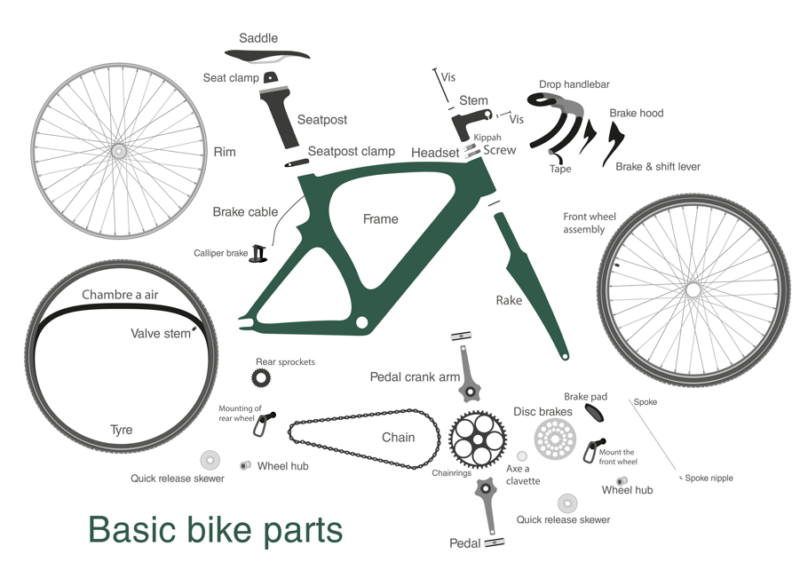
Sports equipment sector – product eco-design and sustainability data management
The group tasked Davidson with studies to reduce product impacts, and governance/processes for key data quality management across their diverse teams.
Large DIY retailer – energy management
With national and international efforts and increasing weather hazards, the retailer wanted to monitor energy use (electricity, gas, water) remotely and in real time across sites, accounting for specifics.
Davidson implemented and configured their EMS with anomaly detection and gap analysis and defined an energy sobriety plan for emergencies and long-term reduction.
