Our observation: The new responsibilities of impact-focused roles
In recent years, the workload and responsibilities of those responsible for impact-related projects have increased, including:
- Measuring their company’s or service’s impact
- Defining objectives aligned with the overall company strategy
- Producing reports to meet external evaluations (clients or recognized bodies), regulatory requirements, or support decision-making
- Annual certifications and labeling to stay competitive on increasingly demanding CSR markets
- Implementing, monitoring, and adjusting action plans consistent with objectives and current company status
- Monitoring and training to comply with new regulations (and anticipate future ones) and adapt job practices as science and technology evolve
All of this requires having a vision (how can the company sustainably position itself in a changing world?), managing large amounts of data from multiple sources, and making actions visible and understandable internally and externally while ensuring humility, transparency, and reliability in communications.
Our vision of the challenges
We are all concerned with impact topics to ensure the sustainability of our activity. Whether:
- for ethical reasons or to give meaning to employees (recruitment, engagement, retention),
- to avoid physical or transition risks (including reputational) impacting all sectors,
- to preserve margins (due to unexpected increases in raw material costs or loss of historical customers),
- or for regulatory reasons as standards evolve rapidly.
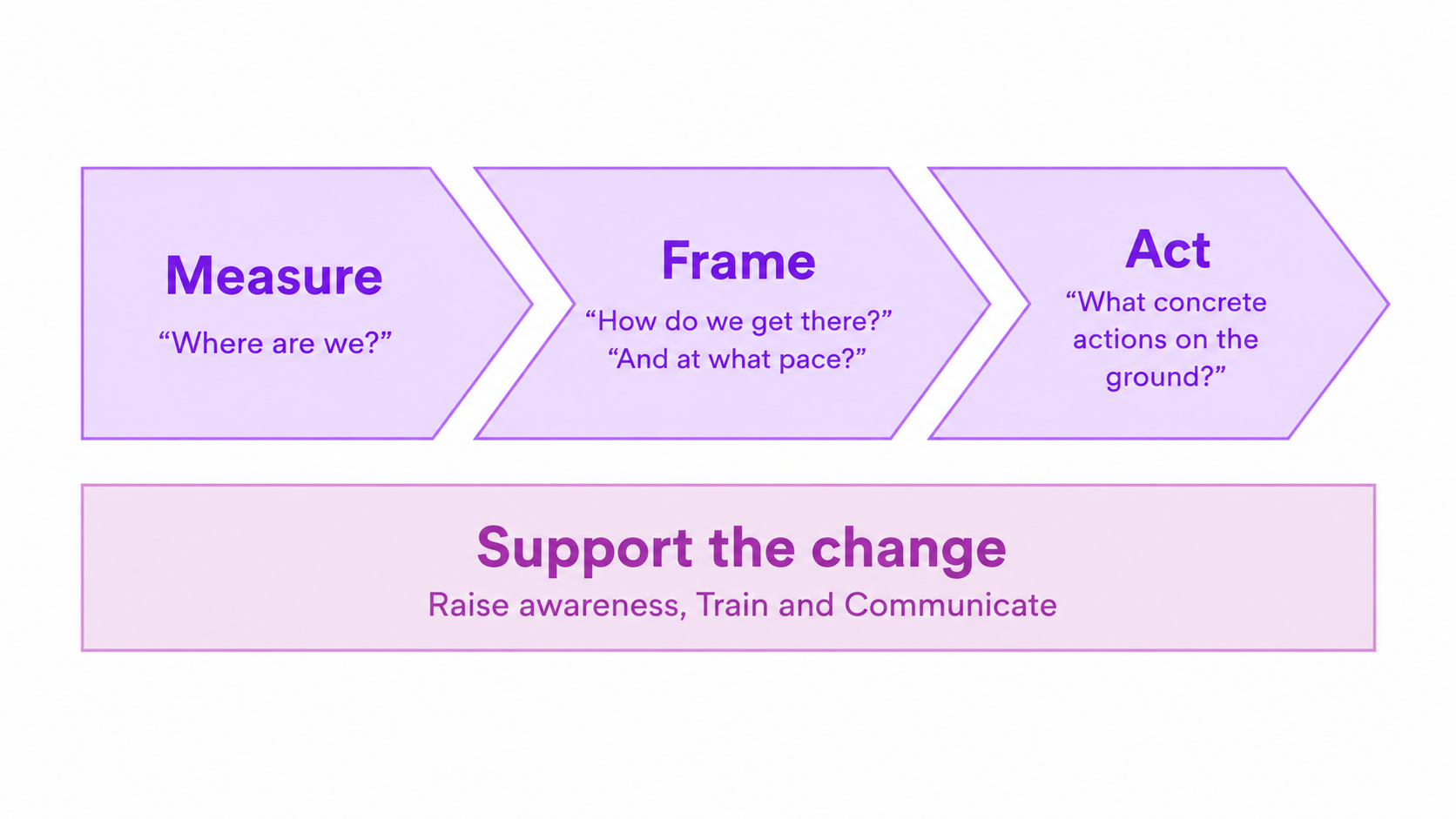
The approach to such projects is always the same but adapted according to ambitions and ongoing actions in each client context.
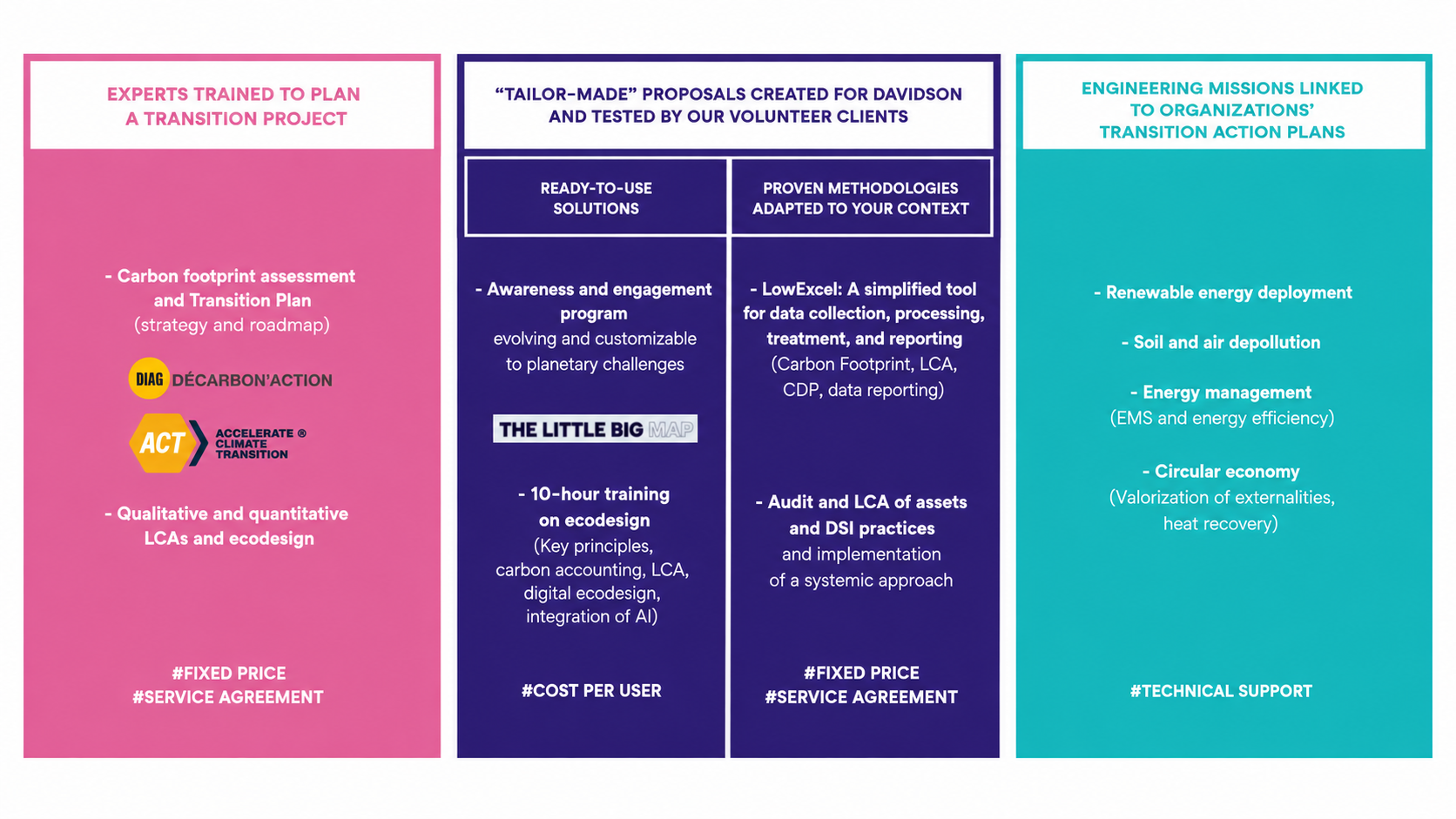
To adapt to each need, we have designed 4 support packages.
Our support offers for the ecological redirection of our ecosystem: